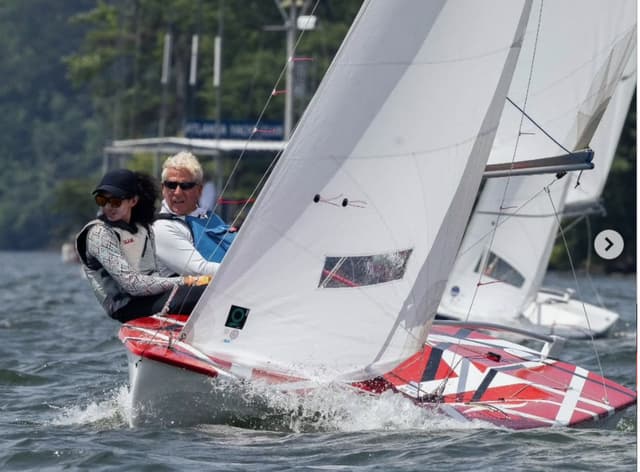
⛵Sailing Upwind
Sail trim, hiking technique, wave handling, tacking, and crew weight placement.
The upwind leg is where races are most often won and lost — and the crew's contribution is massive. Your jib trim, weight placement, communication, and tactical awareness directly drive boat speed and strategic decisions. This module covers everything the crew needs to master for fast, smart upwind sailing.
1. Properly Trimming the Jib Upwind
Upwind jib trim is your most important ongoing task. The goal is to keep the jib producing maximum drive while allowing the boat to point as high as possible. This is a constant balancing act that requires continuous attention.
Finding the Right Trim
- Base trim position: Mark your jib sheet with a reference mark (tape, whipping, or marker) for your standard upwind trim position. This gives you a baseline to return to after tacks and adjustments.
- Constant micro-adjustments:The "right" trim changes continuously with wind speed, wave state, and angle. Keep your hand on or near the jib sheet at all times so you can make small adjustments without delay.
- Trim for the conditions, not just the telltales:In flat water, you can trim tighter for maximum pointing. In waves, ease slightly to keep the jib from stalling as the boat pitches through chop.
Managing the Jib Leech Telltale
The leech telltale — the yarn or ribbon at the top of the jib's trailing edge — is your most important trim indicator beyond the luff telltales:
- Streaming aft freely: Good — the leech is not too tight. Air is exiting the sail smoothly.
- Occasionally flicking behind the sail: Perfect — you are right at the edge of optimal trim. The leech is loaded but not stalled.
- Constantly stalled (hidden behind the sail):Too tight — the leech is hooked, creating drag and backwinding the mainsail. Ease the sheet slightly or move the fairlead aft.
- Always streaming and never flicking: Too loose — the leech is too open and you are losing pointing power. Trim in or move the fairlead forward.
2. Pointing Mode vs. Footing Mode
The skipper and crew work together to sail in either "pointing mode" (high and slower) or "footing mode" (lower and faster), depending on the tactical situation. The crew adjusts trim and weight for each:
Pointing Mode
- When to use: Approaching a layline, trying to lee-bow a competitor, sailing in a narrow channel, or when you have clear air and want to maximize height.
- Jib trim: Slightly tighter than normal. Fairlead may be slightly more forward. The leech telltale will stall a bit more — that is okay in pointing mode.
- Weight: Slightly more forward to reduce drag from the transom. Boat as flat as possible.
- Communication:Skipper may call "pointing" or "let's go high." You respond by trimming and adjusting weight accordingly.
Footing Mode
- When to use: Accelerating after a tack, sailing through dirty air, building speed in waves, or when you need to cross ahead of a boat on the other tack.
- Jib trim: Slightly eased from normal. The luff telltales may show the windward one lifting slightly — that is fine, it means you are sailing with more speed and less drag.
- Weight: Standard position. The boat may heel slightly more than in pointing mode — this is acceptable for the speed gain.
- Communication:Skipper may call "footing" or "let's get some speed." Ease the jib 1-2 cm and prepare for the slightly different angle.
3. Observing the Compass and Communicating Shifts
The compass is one of the most valuable tactical tools on the boat. As crew, monitoring the compass and communicating meaningful changes to the skipper helps make smart tactical decisions about when to tack and which side of the course to favor.
What to Watch For
- Baseline heading: At the start of the leg, note your average compass heading on each tack. This is your baseline for detecting shifts.
- Lifts: When the compass heading increases (you are pointing higher toward the mark without trimming), you are being lifted. This is favorable — keep sailing on this tack.
- Headers: When the compass heading decreases (the bow is pushed away from the mark), you are being headed. This may be a signal to tack if the header persists.
- Material changes: Communicate shifts of approximately 5 degrees or more that persist for more than a few seconds. Small oscillations (2-3 degrees) are normal and do not need to be called.
How to Communicate
- Lifted:"We're lifted 5 degrees — heading 235 now, was 230."
- Headed:"We're headed — down to 225. Persistent. Want to think about tacking?"
- Trend:"Wind has been trending left the last 5 minutes — we keep getting lifted on starboard."
- Don't over-call: Calling every small fluctuation is distracting. The skipper needs to know about meaningful, actionable changes.
4. Reading the Course Ahead
While the skipper focuses on steering and immediate tactical decisions, the crew should be constantly scanning the water and course ahead:
Pressure (Wind on the Water)
- Dark patches:Darker, rippled water indicates more wind. Call these out: "Pressure coming from the left in about 30 seconds" or "Big puff approaching."
- Light patches:Smooth, glassy water means less wind. "Looks light ahead — hole between us and the mark."
- Combining pressure with shifts: Puffs often bring shifts. If you see pressure coming from the left, it may bring a left shift — valuable tactical information.
Other Boats
- Crossing situations:"Boat on port, looks like we cross" or "Port boat — it's going to be close, your call."
- Competitors' performance:"Boats on the left are gaining — they may have better pressure" or "We're walking through the group ahead."
- Layline calls:"I think we can lay the mark on this tack" or "We need one more tack — still short."
- Traffic for tacking:Before the skipper tacks, confirm it is clear: "Clear to tack" or "Hold on — boat coming on port, wait 10 seconds."
The Weather Mark
- Keep the weather mark in sight and track your angle to it as the leg progresses.
- Warn the skipper when you are getting close to the layline — both overstanding (sailing past it, wasting distance) and understanding (coming in too tight) cost places.
5. Weight Placement and Hiking
Fore-and-Aft Position
- Flat water: Weight slightly forward — this lifts the transom clear and reduces drag. The bow should not be burying, but the stern should not be dragging either. Find the sweet spot where the boat feels balanced and light on the helm.
- Waves/chop: Weight moves aft slightly to allow the bow to rise over waves instead of plowing through them. If the bow is pounding into waves, you are too far forward.
- Light air: Both skipper and crew move inboard and forward to reduce wetted surface and promote gentle leeward heel.
Hiking — The Crew's Engine
- Hiking is the single most impactful physical contribution the crew makes. A flat boat is a fast boat upwind — every degree of unnecessary heel costs pointing ability and speed.
- Hike with your legs locked under the strap and your body extended as far outboard as comfortable. Your core and quads do the work.
- In heavy air, maximum hiking is required for sustained periods. This is where your fitness preparation pays off.
- In medium air, you can hike at moderate intensity but be ready to increase effort instantly when puffs hit.
Heeling in Light Air
In very light conditions (under 5 knots), the boat should be heeled slightly to leeward (5-10 degrees):
- This uses gravity to help the sails fill and hold shape when there is not enough wind to do so on its own.
- It reduces the wetted surface area of the hull, decreasing drag.
- The slight heel induces a gentle weather helm, which helps the boat track smoothly without the skipper constantly correcting with the rudder.
- As crew, move inboard and slightly forward. Your skipper will do the same. Be very smooth and quiet with all movements — in light air, rocking the boat kills speed.
6. Responding to Puffs — Who Moves First?
When a puff hits, both the boat heels and the wind pressure increases. Both skipper and crew need to react — but if both move at the same time, you can overcorrect and destabilize the boat. Coordinate in advance:
In Lighter Air (Under 10 Knots)
- Crew responds first: When a puff arrives, the crew hikes slightly harder or shifts weight outboard to keep the boat balanced.
- Skipper adjusts second: The skipper can then fine-tune with mainsheet trim — easing slightly if overpowered, or heading up to convert the puff into pointing height.
- Why this order: In light air, the boat is delicately balanced. If both people shift weight and trim simultaneously, the boat jerks and the fragile airflow over the sails is disrupted. Having the crew move first provides a smooth, graduated response.
In Medium to Heavy Air (10+ Knots)
- Both react simultaneously — the crew hikes harder while the skipper eases the mainsheet or heads up. The timing can be more aggressive because the boat has more momentum and is less sensitive to sudden weight shifts.
- In heavy air, the crew may already be hiking at maximum — in this case, the skipper does all the depowering through mainsheet ease, heading up, or vang/cunningham adjustments.
7. Crew Control Priorities While Sailing Upwind
While sailing upwind, the crew is managing multiple controls and responsibilities simultaneously. Knowing what to prioritize prevents you from chasing low-value adjustments at the cost of the things that actually make the boat fast.
Priority Order for the Crew Upwind
- Jib sheet trim (highest priority): This is your number one job at all times. The jib sheet should never be cleated and forgotten — it requires constant adjustment. Even while doing other tasks, keep one hand near the sheet.
- Hiking / boat balance: Keeping the boat flat is tied with jib trim as your top priority. No amount of perfect trim matters if the boat is heeled over.
- Communication (compass, pressure, boats):Feeding tactical information to your skipper is the next tier. Do this continuously, but never at the expense of jib trim or hiking.
- Vang adjustments: Upwind, the vang works with the mainsheet to control leech tension and twist. The crew should know when to adjust it (see below).
- Centerboard position: Should be fully down upwind. Adjust at mark roundings or if the skipper requests a change for balance reasons.
- Cunningham / puller:The cunningham (or "puller" on some boats) adjusts mainsail luff tension. Crew may be asked to adjust this during the leg as wind changes.
When to Adjust the Vang Upwind
- Wind increasing: As the wind builds and the skipper starts easing the mainsheet to depower, the vang becomes more important. More vang tension keeps the leech from twisting open excessively when the mainsheet is eased. Listen for your skipper to call for more vang, or anticipate it when you see them easing frequently.
- Wind decreasing: In lighter air, ease the vang to allow more twist. A too-tight leech in light air stalls the top of the sail and creates drag.
- Before bearing away: Before rounding the weather mark and heading downwind, the vang must be set. This is critical — without vang tension off the wind, the boom rises uncontrollably. Anticipate this and have the vang ready before the rounding.
When to Use the Cunningham (Puller)
- Wind building above moderate: When you see the mainsail draft being blown aft (the deepest point moves toward the leech), it is time for more cunningham. The crew may be asked to pull it on during the leg.
- Between races: Cunningham is often adjusted on shore or between races when conditions have changed significantly.
- Crew's call:If you notice the main looks full and deep in the back half, suggest to your skipper: "Main looks deep aft — want more cunningham?" Great crews notice sail shape and make proactive suggestions.
Housekeeping — Lines Clear and Ready
The crew should regularly check that lines are clear, untangled, and the boat is ready for the next maneuver. But timing matters:
- When to check: Do housekeeping during stable moments — when you are settled on a long tack, in a lull, or when no immediate tactical decisions are needed. Never during a puff, an approaching tack, or when the skipper is making a tactical call.
- Communicate before you move:Tell the skipper before you shift your weight or take a hand off the jib: "Going to clear the new jib sheet — hold steady for a second." This prevents the skipper from being surprised by a sudden weight shift or momentary trim change.
- What to check: Both jib sheets are free and will run clean for the next tack. The vang line is not fouled. The centerboard line is clear. Spinnaker gear (if applicable) is organized for the upcoming downwind leg. The protest flag is accessible.
- Quick and minimal:Housekeeping should take seconds, not minutes. Reach for a line, pull it free, and get back to hiking and trimming. If a bigger tangle requires extended attention, wait for the right moment and warn your skipper: "Jib sheet is fouled — need 10 seconds to clear it. I'm going to ease trim slightly."
8. Kinetics and Body Movement in Waves
In waves, the boat constantly decelerates (climbing a wave) and accelerates (going down the other side). The crew can use legal body movement to help maintain speed:
- Ooching (prohibited, know the limit): Rule 42 prohibits using body movement to propel the boat forward. However, normal movements to adjust position, hike, and respond to waves are legal.
- Pumping and rocking limits: One pump of a sail per wave on a beat is generally not permitted (except in certain conditions defined in the rules). Rolling the boat to windward to prevent capsizing is legal. Know the line.
- What you CAN do: Move your weight forward as the boat climbs a wave (to prevent the bow from stalling) and aft as it goes down (to prevent the bow from burying). This fore-and-aft rocking motion helps the boat maintain speed through waves and is generally legal as it is responding to waves, not creating propulsion.
- Torso movement: Subtle torso movements while hiking — leaning in as the boat goes over a wave crest and extending as it drops into the trough — help keep the rig stable and the boat moving. This should feel like a rhythmic response to the waves, not aggressive pumping.
9. Tacking — Light, Medium, and Heavy Air Techniques
The tack is the most frequent maneuver upwind and the crew's execution is critical to maintaining speed through the turn. Different wind conditions require different techniques.
Light Air Tacking (Under 8 Knots)
- Preparation: Make sure the new jib sheet is free and will run cleanly. Do not rush — a smooth, slow tack loses less speed than a fast, jerky one.
- Jib release: Hold the jib slightly longer as the boat turns — the backed jib helps pull the bow through the wind, which is critical when there is not much momentum.
- Cross slowly: Move your weight across the boat smoothly and deliberately. In light air, rocking the boat during a tack kills speed and may violate Rule 42.
- Jib trim on the new side: Trim the new sheet progressively — do not snap it in to the full trim mark. As the boat builds speed on the new tack, gradually bring the trim to its final position.
- Weight position: Stay inboard and low. Do not hike aggressively until the boat has built enough speed to support it. Premature hiking in light air can stall the boat.
Medium Air Tacking (8-15 Knots)
- This is the standard roll tack: The most efficient tacking technique for dinghies in moderate conditions.
- Initiation:The skipper calls "tacking" or "ready about." You confirm "ready" when the new sheet is clear.
- As the bow crosses the wind: Allow the boat to heel slightly toward you (to leeward of the old tack). This heel helps turn the boat.
- Jib handling: Release the old sheet as the jib starts to backwind. Cross the boat and trim the new sheet in one fluid motion. Aim to have the jib trimmed by the time you are settled on the new rail.
- Rolling the boat flat:As you arrive on the new side, flatten the boat aggressively by hiking out. This rolling motion from heel to flat creates a burst of acceleration — the "roll tack" technique. The roll must be initiated by the tack itself, not by crew body movement alone (Rule 42).
Heavy Air Tacking (15+ Knots)
- Speed is everything: In heavy air, tacks are costly because the boat decelerates significantly during the turn. Only tack when you have a clear tactical reason.
- Preparation: Make sure the new sheet is completely free — even a small snag costs dearly at high speed.
- Cross the boat low and fast: Get under the boom and to the new side as quickly as physically possible. Every second without full hiking power means the boat is heeling and losing speed.
- Jib trim: Sheet the jib in fast but not all the way at first — the boat needs to build speed on the new tack before you can trim to full pointing mode. Start about 2-3 cm eased from your mark, then trim to full once you feel the boat accelerating.
- Hike immediately: The instant you are on the new rail, hike as hard as you can. The boat needs to be flat within seconds of completing the tack or you will lose multiple boat-lengths to competitors who tack more efficiently.
- Avoid the stall: If the boat decelerates too much during the tack, the skipper may need to foot (bear off) briefly to rebuild speed. Be ready for this — ease the jib slightly to support footing mode until the skipper calls for pointing trim again.
Roll Tacking with Steve Cockerill
Former Laser Masters World Champion shows roll tacking technique — watch the crew footwork and weight transfer
10. Questions
❓ Questions for Your Skipper or Coach
Write down any questions that come to mind as you study this module. They'll be saved here for you to bring up at your next practice or meeting.
11. Knowledge Check
📝Module 5 Quiz — Sailing Upwind
Test your understanding of this module.
When the windward jib telltale lifts and the leeward streams, what should the crew do?
What does the jib leech telltale tell you?
What is the difference between 'pointing mode' and 'footing mode'?
When should the crew communicate compass headings to the skipper?
How should the crew and skipper coordinate responding to puffs in lighter air?
In light air, should the boat be sailed perfectly flat?
What should the crew look for when scanning the course ahead?
In heavy air tacking, what is the crew's key physical priority?
How does crew weight placement change for different wave conditions?
What is the correct jib handling sequence during a tack?